Autonomy
Part 3 of COINTELPRO in the Digital Age

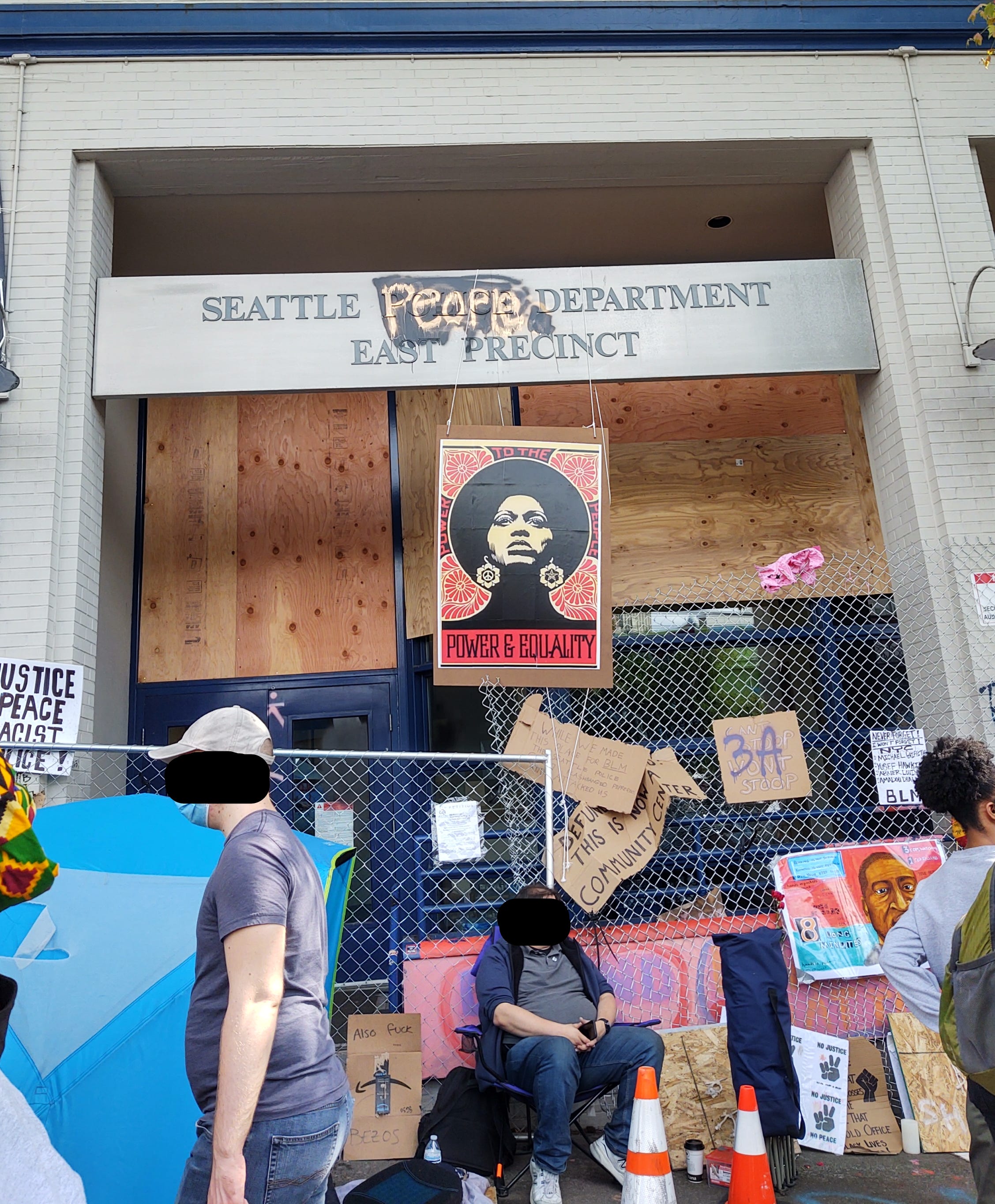
Contents: Life before the protests; my role in the autonomous zone.
Note: These essays reflect the author’s present recollection of events. Some names and characteristics have been changed.
I was a very engaged activist when I was a student at Oberlin College. I went to protests near and far. I worked on causes around political prisoners and civil rights. I supported a variety of organizations with volunteer labor, even as I worked part time and had two majors. I was also a slam poet and the editor of a student literary magazine. I was one of those people who couldn’t sit still.
When June of 2020 came around, I hadn’t been actively engaged in activism since college, not even BLM. I went to BLM protests when someone was killed, but there was no follow-through after these events. Most of my labor and energy went into my job.
I work in environmental policy, or at least I did before the protests. I specialize in liquefied natural gas facilities and the hazards of fossil fuel transportation, like methane leaks and oil train explosions. My research has been used by advocacy groups and environmental activists to defeat proposed fossil fuel terminals and change zoning laws to better protect the environment.
I was admittedly a workaholic before all of this began. I was the regional expert on natural gas emissions and facilities. I read long government reports on the weekends, because that’s fun for me. My research into the life cycle emissions of natural gas changed the permitting process that natural gas facilities had to go through to get approved in the Northwest, which has likely had ripple effects in other parts of the country. I even discovered that the government was helping falsify the safety record of liquified natural gas (LNG) facilities, when I investigated an explosion at an LNG facility in Plymouth, Washington. I was a popular speaker, traveling in Oregon, Washington, and British Columbia, speaking at colleges and law schools, as well as events put on by environmental groups.
I left my job at the end of 2019. I was a hot commodity in my field, so I wasn’t worried about getting another job. The pandemic hit shortly thereafter; the first COVID cases in the country were in the Seattle area. We went on lock-down before anywhere else in the US. It sounds like an unstable time, but I was generally happy. It felt like a time of personal growth and rebuilding. I lived in a cute little studio apartment in Capitol Hill with my cat. I was in several social groups. I went to a lot of happy hours, mainly because that’s when restaurant food is cheapest and I was on a budget.
By the time the protests rolled around mid-way through the year, I was still unemployed, and was more isolated by months of lock-down than I realized. This factored greatly into the degree of energy that I committed to the protests for roughly two months of 2020.
From the end of May until the second week of June, I went to the protests by myself and participated autonomously. I didn’t spend a lot of time with anyone; it was mostly greetings of well-wishes and lending a hand where people needed help.
If I could tell one story that would encapsulate the early days of the encampment, it’s this one: one day I was on my way to the autonomous zone when I saw that someone had broken out the front door of a local community organization called Gay City. Gay City provides many services to the LGBTQ+ community. I went over to the protest and recruited four or five people to help secure the space.


I and several other people went to a grocery store to ask for wooden pallets to help block off the entrance. We told the store manager what had happened, and he helped us out on the condition that we bring the pallets back. A couple people grabbed some chain link fencing that was at the encampment and headed to Gay City as well. Two or three protesters stood watch in front of the building until the owner was able to get the doors properly secured.
The people who volunteered to help were all people I didn’t know, but that was the spirit of the protest. Those are the community members who I believed in and wanted to support with the skills I had to offer. I committed fully, and perhaps blindly so.
My role in the autonomous zone
My observation of mainstream media’s coverage of the early days of the encampment took the blinders off my eyes about the state of American media. I had felt for years that right-wing media was nothing more than propaganda, but I still believed that most mainstream news sources were reliable. Yet I saw the protest presented in the media in a way that was completely inconsistent with what I was witnessing with my own eyes. The police and city government were consistently made to look like the rational actors and we were consistently made to look irrational.
Outlets were not reporting why the autonomous zone came into existence. They weren’t reporting that we were a mutual aid space filling a massive need opened up by the pandemic. You could barely find masks at that time. We had masks. We had sanitizer and other items that had been cleared out of stores. We had hot food and nonperishable food. The sheer scale of good that happened in the early days of CHAZ was astounding. We were a BLM protest, an organizing space, and much more.
I was aware that some of the events or projects people were putting together at the protest might seem silly. I was aware that a small subset of people got up to shenanigans at night, like riding a Tesla through the protest to film a music video. (True story.) But in the beginning, it was a very rich space with a diverse group of people who were contributing a net positive to the neighborhood after what the police had just done to the community.
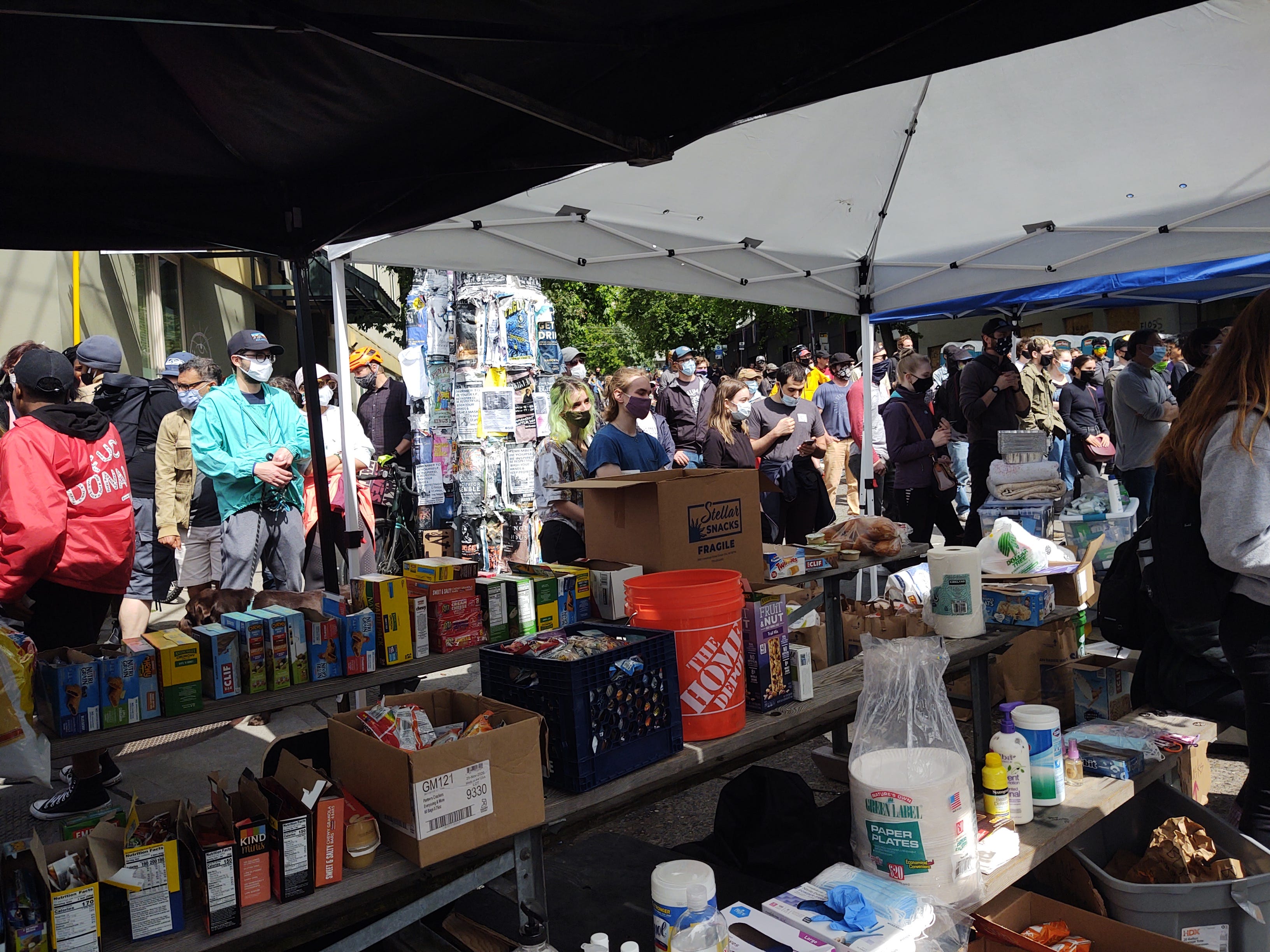
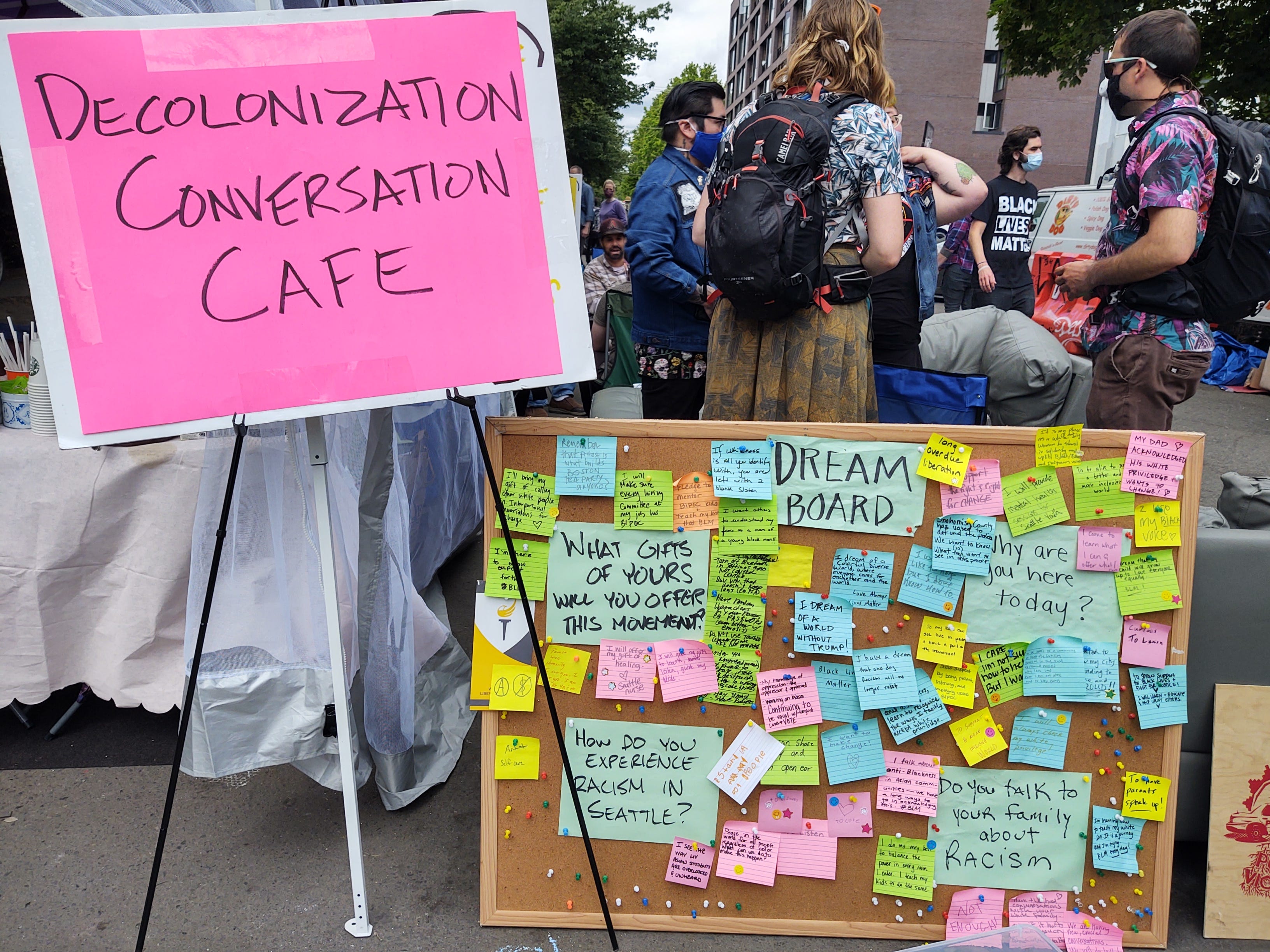
For me, there was something magical about the space. I would go there with the intention of just walking through, and not come home for six hours. I was in awe of it. I had never seen so many people come together to take care of each other, nor so many people give their time and creativity rather than throwing money at a cause and going about their day. I had also never seen so many white people willing to risk their safety for my rights. Usually when liberal white Americans talk about being willing to defend a right, they’re talking about the first amendment rights of racists. (“I may not agree with it, but I’ll defend to the death your right to say it,” etc.)
Journalists were commonplace within the encampment. Some spent weeks there. Some would marvel, to us, at how “cool” and peaceful the space was. Then, their articles would make us look like we were extremist hippies who had a “warlord,” with semi-automatic weapons flowing freely through the protest. They would claim we had objectives we simply didn’t have. They insisted on identifying a leader when we didn’t have one. The disparity between what we were doing and what they were reporting shook the faith I had in journalism as the fourth estate. It made me question American media in a way I never had before.
The police, feds, and right wing media were getting a false narrative out there daily, so I felt protesters also needed someone with media experience to represent us. My environmental work had brought me into regular contact with the press. So, my contribution to the encampment was to speak to the media to counter false narratives, and to train other protesters on speaking to the media. I went to the encampment almost daily for this purpose, and to experience the positive space that had been built.
Since it was a leaderless space, I didn’t need permission from anyone to take on the role I took. I kept up with the news every day. The press was amplifying the colorful characters, who were not necessarily representative nor well-spoken on the issues. Right-wing media “flooded the zone” with disinformation about CHAZ, usually in the form of culture war slop. I wanted to tell people what was really happening.
I was pretty effective locally. Local people knew what had happened to us in the days leading up to the encampment, and tens of thousands of people had seen CHAZ with their own eyes. But the state had far more resources through which they could control the narrative outside of Seattle, with people who had not witnessed what the police did to us and had never seen the encampment themselves.
I often declined to be identified by the press or appear on camera, for my safety.
This changed after I joined a “collective” of protesters and began to do media work for the collective. In fact, everything changed after that.